Inspired by “MARY, A Girl Who Changed the World” by Wendy J. Levenfeld
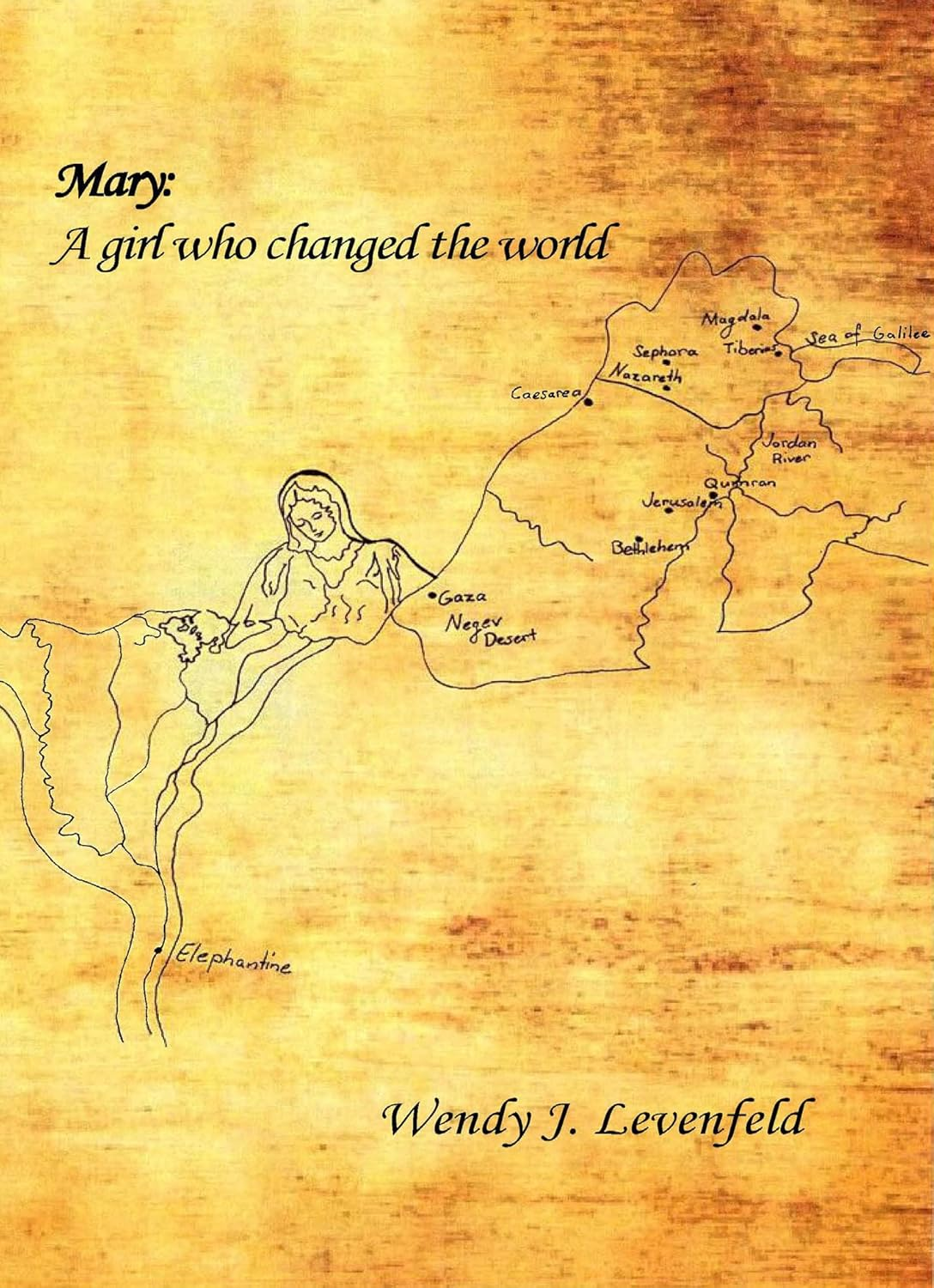
Love often comes quietly. It does not necessarily demand attention or recognition. It simply breathes, grows, and changes whoever it has chosen to carry. In Mary: A Girl Who Changed the World, Wendy J. Levenfeld invites the reader into a consideration of love, not some poetic ideal, but a living force moving through the life of a young girl who would become the most influential mother in history. What emerges is a portrait of love that is gentle yet unshakeable, private yet world-shaping, ordinary yet divine.
Mary’s love begins long before her son is born. It begins in the lessons whispered by her grandmother, Emerentia, and in the comforting wisdom of her mother, Ann. It grows in Nazareth’s dusty pathways, in quiet embroidery sessions, and in childhood friendships, teaching courage. Through these ordinary moments, Levenfeld reveals a truth often overlooked in the grand retellings of sacred stories: love is formed in the mundane long before it is tested in the miraculous. Mary’s heart was being trained in tenderness, compassion, and faith from the earliest days of her life, long before angels and prophecy ever altered her path.
But what makes Mary’s love extraordinary is not just the destiny of the child she would bear, but how she carried that destiny, with humility, with fear, with devotion, and above all, unshakeable trust. When she travels to Bethlehem, exhausted and chilled by winter’s grip, there is no majesty. There is only a young woman leaning on a husband’s steady resolve, clinging to her belief that God had not abandoned her. And when her son is born in a cave, not a palace, not a temple, not among the esteemed, Mary’s love becomes her strength. She pulls him close, prays through her exhaustion, and wonders if she is enough. It is a moment every mother, regardless of era, understands intimately.
Throughout the book, Levenfeld brings forth Mary’s humanity: her doubts, her fears, her need for reassurance. Yet she also shows how Mary’s love continually rises above those fears. It is this love-unyielding, sacrificial, rooted in faith-that eventually shapes the teachings of Jesus himself. A child who grows within such a heart learns compassion not as instruction but as example. He learns forgiveness, gentleness, patience, and courage because he was first taught them by a mother who embodied divine love long before the world recognized his divinity.
The power of Mary’s love was not that it was loud; it was that it endured. It endured ridicule, danger, uncertainty, prophecy, and finally grief beyond imagination. It carried her through the unknown and anchored her son as he stepped into a destiny that would change human history. The worldwide faith that flowered from his teachings did not occur in a vacuum; it grew from the soil of Mary’s steady, unconditional love. In today’s world, where strength is so often confused with force and influence with noise, the example of Mary seems more relevant than ever. Mary: A Girl Who Changed the World reminds us that love, quiet, steadfast, deeply rooted love, can still move mountains. It can still reshape futures. And sometimes, it can change the world.