Some stories feel familiar before we even finish the first pages. Not because we know the ending, but because they speak to something quietly remembered within us. That is the experience of reading Mary, A Girl Who Changed the World. Rather than presenting Mary as a distant figure shaped only by history and theology, Wendy J. Levenfeld brings her forward as a young girl learning how to live inside uncertainty, faith, and responsibility long before the world knew her name.
What stands out most is how gently the story unfolds. Mary is not rushed toward greatness. She is allowed to be curious, unsure, observant, and thoughtful. Her world is shaped by family, by women who teach through conversation and example, and by moments of reflection that feel deeply human. This approach makes the story feel grounded, intimate, and emotionally accessible, even when it moves through extraordinary circumstances.
Wendy J. Levenfeld places strong emphasis on the inner life of Mary. We see how faith is formed not through grand declarations, but through lived experience. Faith grows in small moments, in lessons passed down by a grandmother, in quiet talks with a mother, and in the simple rhythm of daily life. These moments shape Mary long before she understands the full weight of her future, reminding readers that strength is often cultivated slowly and silently.
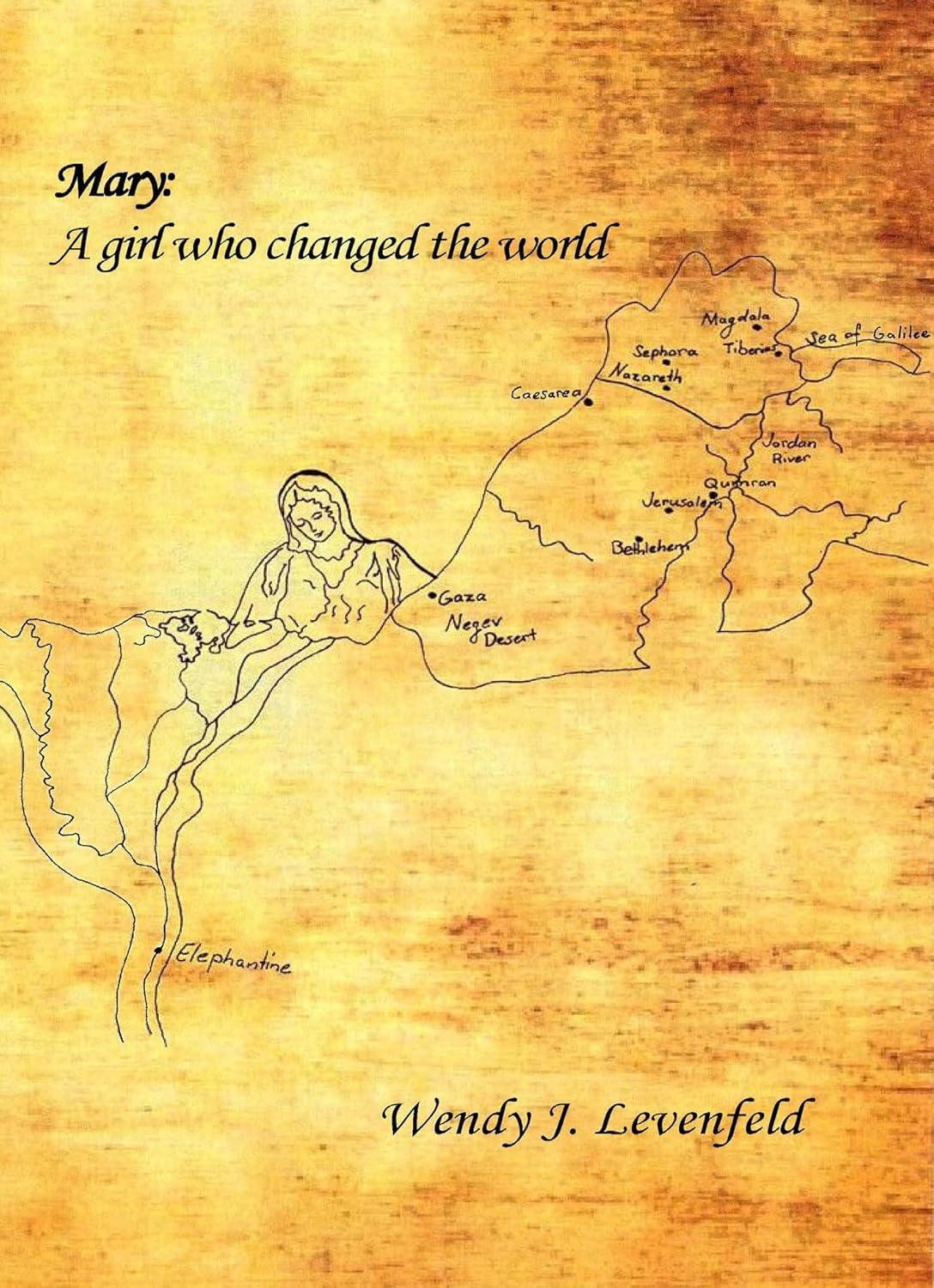
Another powerful element of Mary, A Girl Who Changed the World is its attention to place. Cities like Nazareth and Jerusalem are not just settings, they are experiences. Through Mary’s eyes, readers feel the contrast between the familiar and the overwhelming, the intimate and the vast. Jerusalem in particular is presented not as a symbol to be explained, but as a place to be felt. The crowds, the splendor, the authority, and the confusion all press in at once, creating a moment of awakening rather than clarity.
What makes this portrayal especially compelling is Mary’s response. She does not demand answers. She does not retreat in fear. Instead, she observes, absorbs, and trusts that understanding will come in time. This quiet resilience is one of the most moving aspects of the book. It reflects a form of courage that is often overlooked, the courage to move forward without certainty.
Wendy J. Levenfeld also excels at portraying relationships, particularly the bonds between women. The wisdom passed from grandmother to mother to daughter feels authentic and deeply rooted. These women do not prepare Mary for her future through prophecy alone, but through love, discipline, and example. They teach her how to think, how to reflect, and how to remain grounded in faith even when life feels unclear.
As the story progresses, it becomes evident that Mary’s strength lies not in knowing her destiny, but in her willingness to accept it without fully understanding it. This is where the book quietly resonates with modern readers. Many people live with unanswered questions, uncertain paths, and responsibilities that feel larger than themselves. Mary’s journey offers reassurance that uncertainty does not mean inadequacy.
In Mary, A Girl Who Changed the World, Wendy J. Levenfeld offers a portrait of faith that feels lived rather than idealized. It is a story about becoming, about listening more than speaking, and about finding steadiness in the midst of not knowing. Mary’s transformation does not happen in a single moment, it unfolds gradually, shaped by love, wisdom, and trust. This is a book that invites readers to slow down, reflect, and reconsider what quiet strength truly looks like. Through Mary’s eyes, we are reminded that changing the world does not always begin with certainty, sometimes it begins with the courage to keep going anyway.