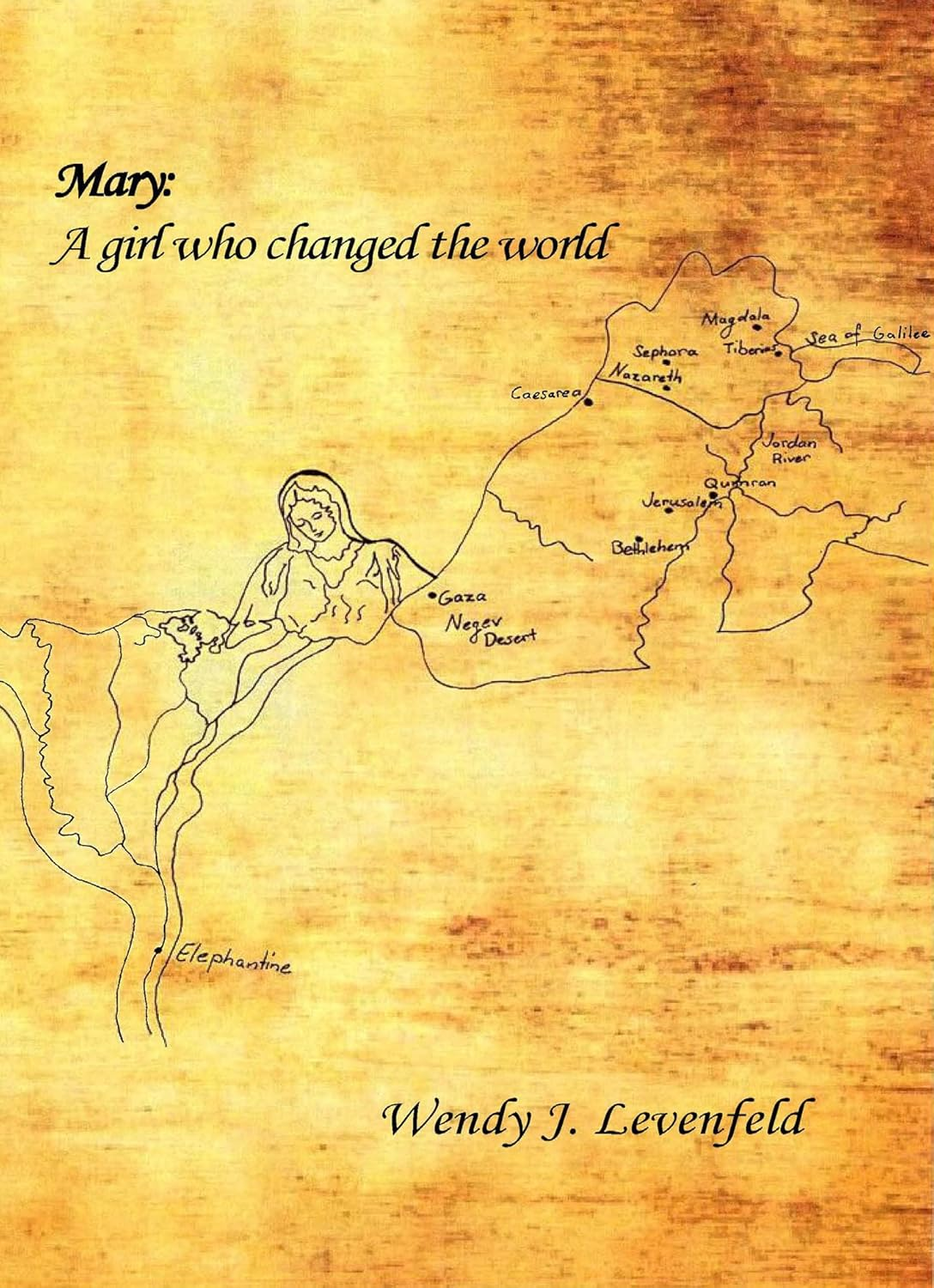
In many retellings, Mary is presented as a finished figure, calm, resolute, and already formed by destiny. What makes Mary, A Girl Who Changed the World so striking is its refusal to begin there. Instead, Wendy J. Levenfeld invites readers into Mary’s inner world long before certainty arrives, when faith is still being shaped by questions, relationships, and lived experience.
This Mary is thoughtful, observant, and deeply human. She listens more than she speaks, absorbs more than she reveals, and quietly wrestles with ideas far larger than herself. Rather than presenting faith as something that simply descends upon her, the story shows how belief is learned over time. It grows through the steady influence of women, through family conversation, through moments of doubt as much as moments of reassurance.
One of the most powerful aspects of the book is its attention to lineage. Mary does not emerge in isolation. Her grandmother’s wisdom and her mother’s grounded devotion create a foundation that feels organic and earned. These women teach her how to reflect, how to question without fear, and how to carry faith into daily life. Wendy J. Levenfeld portrays this transmission of wisdom with great care, reminding readers that spiritual strength often begins at home, in quiet instruction rather than grand declaration.
Mary’s faith is not loud or performative. It is inward, patient, and resilient. She does not always understand what lies ahead, but she senses that her life will require trust. The absence of complete understanding does not paralyze her. Instead, it becomes part of her journey. In Mary, A Girl Who Changed the World, faith is not about possessing answers, it is about learning how to live with unanswered questions.
As Mary encounters the wider world, especially places of power and tradition, her sensitivity deepens. She notices contradictions, splendor alongside excess, holiness beside human ambition. Yet she does not become cynical. Her response is reflection rather than rejection. This quiet discernment becomes one of her greatest strengths. Wendy J. Levenfeld allows Mary to remain curious, even when clarity is withheld.
The book also captures the emotional weight of expectation. Mary is aware that something is asked of her, even if she does not yet know its full shape. This awareness brings moments of fear and vulnerability, but also moments of calm acceptance. What emerges is a portrait of courage that feels authentic. Courage here is not dramatic defiance, it is the steady willingness to continue forward.
In Mary, A Girl Who Changed the World, motherhood is not idealized or simplified. It is presented as both sacred and daunting. Mary’s reflections reveal universal questions, am I enough, will love be sufficient, how do I protect what matters most. These questions ground the story in shared human experience, making Mary’s journey accessible to readers across belief systems.
Wendy J. Levenfeld writes Mary as a bridge between generations, between tradition and transformation. Her strength lies not in certainty, but in trust. She learns that faith does not eliminate fear, but it can coexist with it. This portrayal feels especially resonant in a modern world where clarity is often elusive and belief must be chosen daily.
Ultimately, this book reminds us that history is shaped not only by bold action, but by quiet resolve. Mary’s story, as told by Wendy J. Levenfeld, honors the unseen moments, the internal struggles, and the gentle decisions that change the course of the world. Mary, A Girl Who Changed the World invites readers to reconsider faith, courage, and the power of choosing trust, even when the path ahead remains undefined.