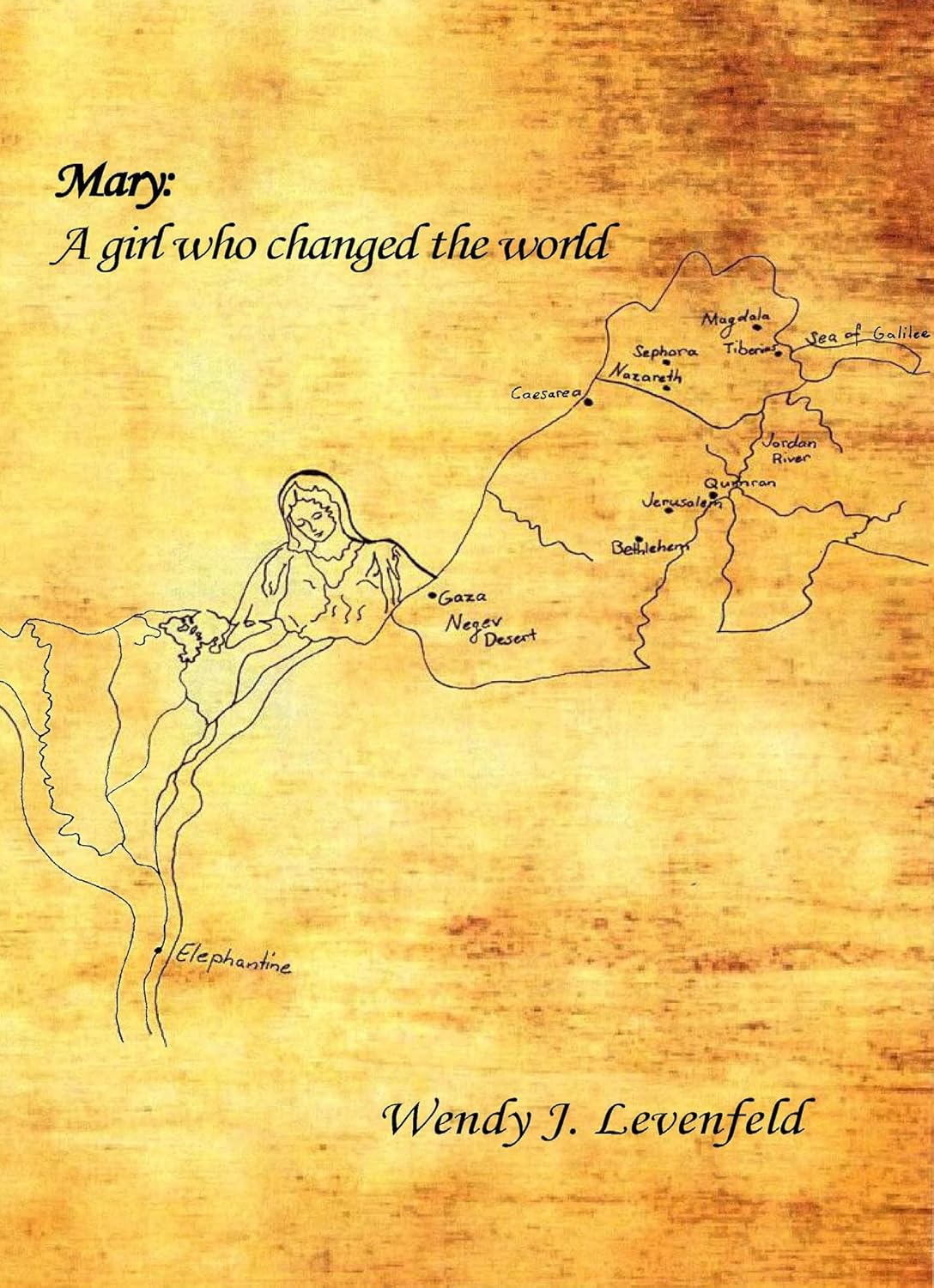
There is something quietly powerful about the way sacred moments appear in ordinary life. They rarely announce themselves. They arrive softly, in daily routines, in conversations shared between generations, in small realizations that slowly change how the world is seen. This is one of the most resonant threads running through Mary, A Girl Who Changed the World by Wendy J. Levenfeld.
Rather than presenting holiness as something distant or unreachable, the story grounds it in lived experience. Mary does not grow up surrounded by constant revelation. She grows up sweeping floors, learning from her grandmother, listening to her mother, tending to daily tasks, and asking thoughtful questions. The sacred is not confined to temples or grand events, it is woven into the texture of her everyday life.
Wendy J. Levenfeld approaches Mary’s story with remarkable restraint and sensitivity. Faith is not portrayed as dramatic or overwhelming. Instead, it unfolds gently, shaped by repetition, memory, and presence. Mary learns who she is not through sudden insight, but through years of observation and quiet reflection. She notices how people treat one another, how love is expressed through care, and how belief shows itself in consistency rather than spectacle.
In Mary, A Girl Who Changed the World, the ordinary becomes a teacher. Conversations between Mary and the women in her life carry as much weight as any formal lesson. Wisdom is passed down through shared labor and simple guidance, not through sermons. These moments remind the reader that meaning is often built slowly, through attention and patience.
Mary’s sensitivity to the world around her is one of her defining traits. She sees significance where others see routine. She finds calm in stillness and understanding in silence. Wendy J. Levenfeld allows these qualities to develop naturally, never forcing them into symbolic gestures. As a result, Mary feels real, grounded, and deeply human.
The sacred, in this telling, is not separate from fear or doubt. Mary experiences uncertainty, frustration, and vulnerability, yet these emotions do not diminish her faith. They deepen it. Faith becomes something she lives with rather than something she performs. It grows stronger precisely because it exists alongside the ordinary challenges of life.
What makes this portrayal so compelling is how familiar it feels. Many readers will recognize their own experiences reflected here, moments when meaning surfaced unexpectedly during everyday life. A quiet realization, a comforting presence, a sense of being guided without knowing exactly how. Mary, A Girl Who Changed the World captures this universal experience with grace.
Wendy J. Levenfeld also gently challenges the idea that transformation must be loud or visible. Mary’s growth happens internally. Her understanding expands through listening and watching rather than through action alone. This approach reframes strength as something subtle, rooted in awareness and steadiness rather than force.
As Mary moves through her world, the sacred does not remove her from reality. It anchors her more deeply within it. She learns that belief is not about escaping life’s demands, but about meeting them with openness and trust. The ordinary moments of her life prepare her for the extraordinary, not by changing who she is, but by revealing who she has always been becoming. In Mary, A Girl Who Changed the World by Wendy J. Levenfeld, readers are reminded that holiness often hides in plain sight. It lives in patience, in care, in quiet courage, and in the willingness to notice. Mary’s story invites us to slow down and recognize the sacred threads already woven into our own daily lives, waiting not to be discovered, but simply to be seen.